
Deliver Us: Simcha Chagiga
 Pastor Jason
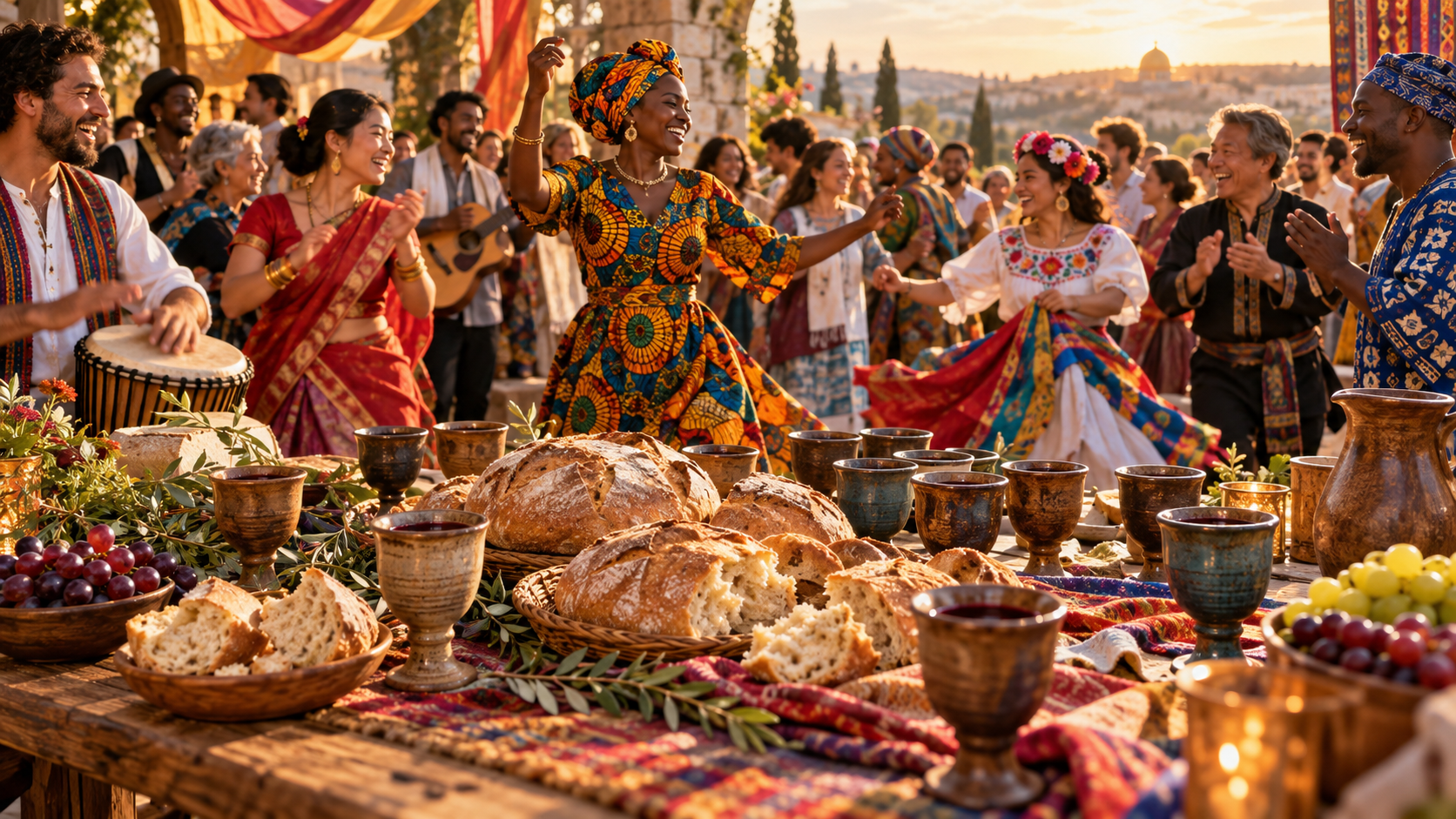
 Communion is one of the most sacred moments in the life of the church. We bow our heads. We remember Jesus’ last night with his disciples. We remember a body broken and blood poured out. There is grief at the table, and there is holy mystery there too. But grief is not the whole story. The one who says, “Do this in remembrance of me” is also the risen Christ. Communion is not only a solemn ritual of remembrance; it is also a joyful celebration of grace, freedom, hope, and the life God is bringing into the world.
That is why the Hebrew words simcha chagiga — joyful celebration — offer such a beautiful way to think about Communion. In The Prince of Egypt, those words are part of the song the Hebrew people sing on the night before they leave Egypt. Freedom is close, but it is not complete. They have not crossed the sea. Pharaoh has not disappeared from their lives. They do not know what the wilderness will hold.
The biblical story in Exodus 12 carries that same tension. In the middle of uncertainty, God tells the people to eat. They eat with sandals on their feet and staffs in their hands, dressed for the road. This is not a celebration held safely at the end of the journey. It is a meal shared on the way to freedom.
That matters because we often think joy has to wait. We will celebrate when the diagnosis changes, when the relationship heals, when grief becomes lighter, when the world finally settles down. But biblical joy is not pretending everything is all right. Joy does not require the story to be finished.
Sometimes we sing before every prayer has been answered. Sometimes we laugh with tears still in our eyes. Sometimes we sit down at the table while we are still wearing our traveling shoes. The journey may not be finished, but God has given us reason to sing along the way.
Isaiah imagines the completion of God’s work as a feast for all peoples, a table where death is swallowed up and tears are wiped away. So every time we gather for Communion, we are not only remembering what Christ has done; we are also anticipating the world God is still bringing into being.
On World Communion Sunday, that vision becomes even larger. Christians gather at Christ’s table across nations, languages, traditions, and circumstances. Some come celebrating. Some come grieving. Some arrive overflowing with gratitude. Others are barely holding themselves together. And Christ says to all of us: Come. There is room. There is bread. There is grace.
The world is not whole yet, but God has set the table. Every tear has not been wiped away, but resurrection life is promised and still coming toward us. Fear does not get the last word. Death does not get the last word. God does.
Simcha Chagiga. A joyful celebration.
We do not come to the table because the journey is finished. We come because God has given us reason to sing along the way.
Key Scriptures
Exodus 12:1–14
Isaiah 25:6–9
Key Takeaways
Communion is more than a solemn ritual
Communion remembers Christ’s suffering, but it also celebrates grace, freedom, hope, and resurrection life. The table holds both reverence and joy.
Joy does not require the story to be finished
Israel ate the Passover meal before freedom was complete. In the same way, we should not wait until every problem is solved before receiving and sharing the joy God gives us.
God gives us bread for the journey
The Passover meal was eaten with sandals on and staff in hand. God’s people were still on the way, and the meal reminded them that God was still leading them toward freedom.
Communion lets us practice the world God is bringing
Isaiah imagines God’s future as a feast for all peoples where death is swallowed up and tears are wiped away. At Christ’s table, we begin to live into that promised future now.
Some joys are too good to keep to ourselves
Joy grows when it is shared. Around the table, we can notice the gifts, people, memories, and signs of grace that remind us that God has given us reason to sing along the way.
Questions for Reflection
Where in your life are you tempted to believe that joy must wait until everything is resolved?
What is one sign of grace or goodness that has found you in the middle of a difficult season?
How might Communion feel different if you approached it not only as remembrance, but also as a joyful celebration of what God is doing and has promised to do?
What does it mean to trust that suffering, fear, and death do not get the last word, even when you cannot yet see how the story will unfold?
Who is someone with whom you could share a joy this week rather than keeping it to yourself?
How might your life change if you learned to notice and celebrate God’s goodness while you are still on the journey?
Recommended Posts

Deliver Us: Never in a Million Years
September 28, 2026
Deliver Us: All I Ever Wanted
September 22, 2026

Deliver Us: God Hears Our Cry
September 15, 2026