
It’s One Thing to Hear It…
 Pastor Jason
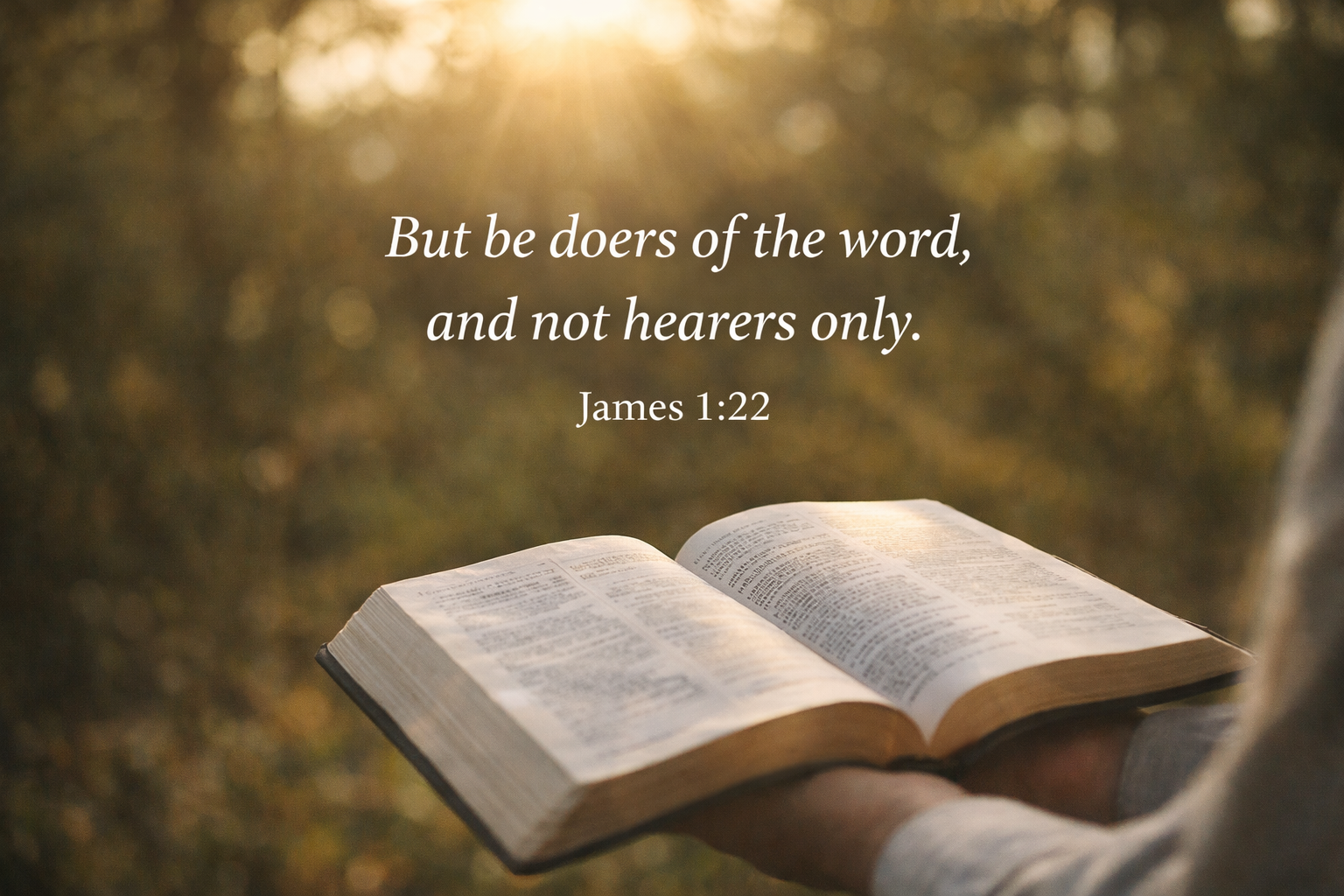
 God’s word is meant to be lived, not merely heard. Isaiah, Deuteronomy, and Matthew converge to press that single, practical claim. Together, these books name Israel as beloved and declare Jesus as God’s chosen Son, and then they show how this identity becomes real through repeated, embodied practices. The Deuteronomic commands to keep, recite, bind, and write the words sketch a spiritual pedagogy: memory shaped by family, speech, ritual, and place. Matthew’s account of Jesus’ baptism reframes prophetic language into a human life that walks into the water to stake a public claim on divine belonging. The result is a theology of formation in which language, body, habit, and community cooperate to make the scriptures alive.
Practices matter: regular reading, teaching, singing, and even writing of scripture are tools that move doctrine from head knowledge into heart habit. Pastor Joanie talked about how easy it is to start reading and studying scripture AND how much easier it is to stop, forget, or neglect the habit as well. Here is the truth: habits are fragile and require concrete rhythms and community support. Baptism is one of our ritual anchors. It is a public, physical act that both recalls a prior initiation and renews a present commitment to keep learning, practicing, and embodying the word. We remember our baptism each year to help us hold the anchor. Communion is similar for our community as it reminds us weekly to live the words we profess.
Small, repeatable practices are important. Teaching children, speaking scripture at home, writing passages, showing up each week for one another in worship — each of these are the means by which we claim and sustain our identity as followers of Jesus. These practices and rituals are not end points but reiterations of a lifelong apprenticeship in God’s ways. The point is straightforward and urgent: claim who God says you are through the steady work of living the scriptures in everyday life.
Key Scriptures
Isaiah 42:1-9
Deuteronomy 6:4–9
Matthew 3:13–17
Key Takeaways
- Make Scripture a daily habit – Practicing scripture daily turns texts into rhythms that shape perception and decision-making. Habit is the classroom where doctrine becomes discernment; repetition disciplines our attention so the heart listens to God before our impulses have their way. Small, consistent practices rewire our longing and action towards God’s priorities much more effectively than the occasional spiritual sprint. [27:44]
- Baptism publicly claims your identity – Baptism is a public enactment that names a person within God’s story and within a community that must bear witness to that claim. It is both a declaration and a call to live under the identity conferred—its power is relational and sustained by the church’s accompaniment. Such a rite helps translate private belief into communal responsibility. [33:47]
- Repetition transforms knowledge into life – Hearing or reading scripture once does not form character; repetition—reciting, singing, teaching—creates muscle memory for obedience and love. The command to recite to children and to talk of scripture in every season is a practical anthropology: formation happens in ongoing, ordinary speech. Repetition cultivates an instinct for God’s ways. [03:20]
- Practice invites creative, physical disciplines – Spiritual formation is embodied: writing scripture, walking to the water, and standing at the table are physical acts that alter our thinking and desires. Creative engagement with the text—copying, performing, teaching—reveals fresh details and resists abstraction, making theological claims tangible. Embodied practices make faith learnable in the body as well as the mind. [30:59]
Questions for Reflection
Deuteronomy 6:8 mentions binding words on the hand and fixing them on the forehead. How does this physical imagery suggest that God’s word should influence both a person’s outward actions and their internal thought processes? [26:48]
It is one thing to hear the scriptures, but another to live them, do them, and be them [20:06]. What is one specific scripture or teaching you have “heard” many times, but find difficult to actually “embody” in your daily routine?
Many of us learned things like the Lord’s Prayer or the 23rd Psalm through simple, weekly repetition [23:48]. What are some other rhythms or “repeats” in your current life—spiritual or otherwise—that are shaping who you are becoming?
Spiritual habits are often fragile and can be easily interrupted by life events or family changes [28:59]. When you have fallen out of a spiritual rhythm in the past, what was the biggest obstacle to starting again, and how did you find your way back?
Baptism is a public declaration that we are children of God [33:29]. How does remembering your identity as “beloved” change the way you handle the pressures or criticisms you face during the work week?
Recommended Posts
God Gave Them Up
January 27, 2026
One Gospel, One Family
January 26, 2026

Light Dawns
December 9, 2025