
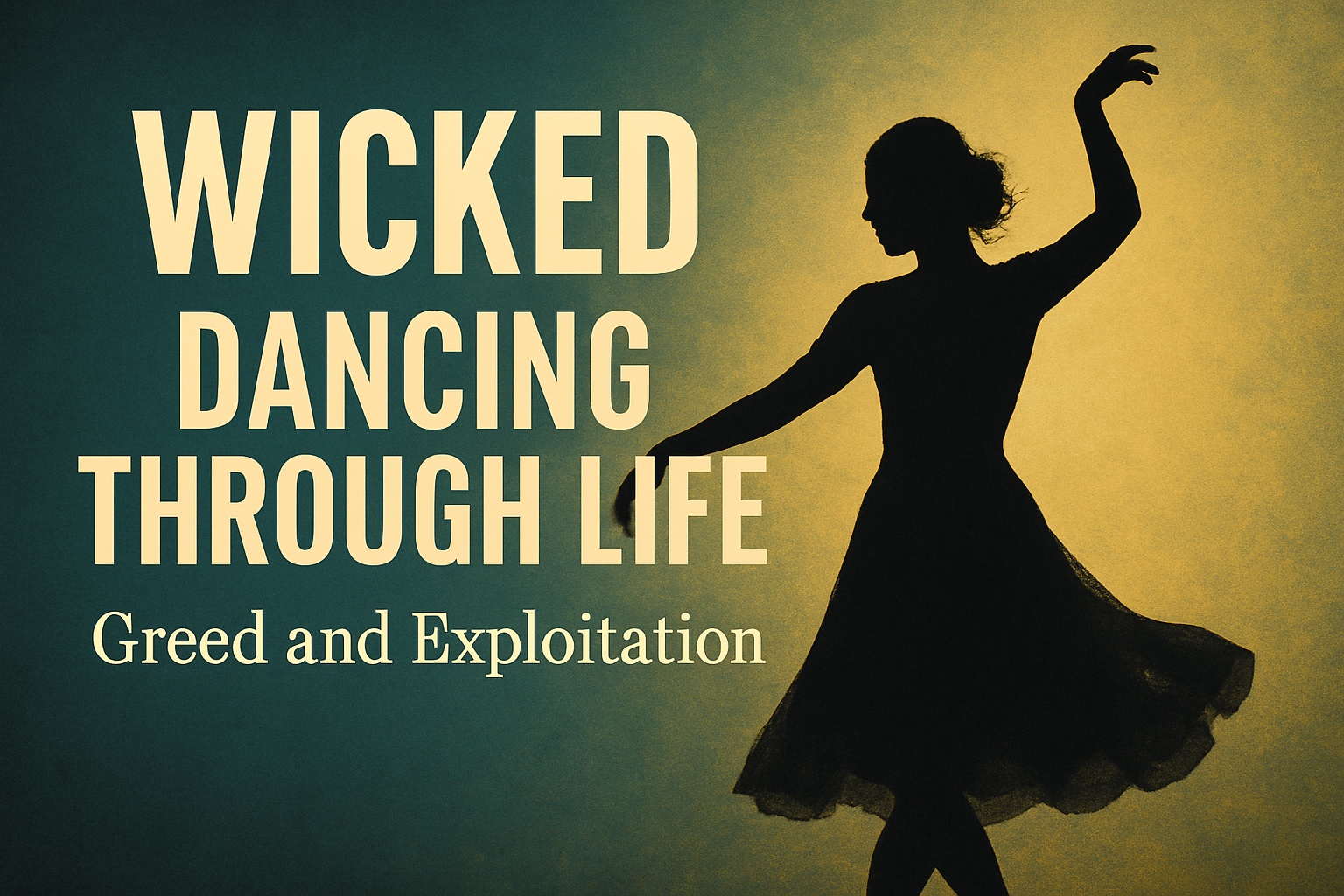
Wicked Dancing Through Life
 Pastor Jason
 We are often tempted to “dance through life” with ease, gliding past responsibility and pain, just as some of the characters in the story of Wicked do — enjoying comfort at the expense of others. The world’s rhythm can be catchy: “Nothing matters but knowing nothing matters.” Yet, beneath the surface, this way of living is fueled by entitlement and greed, where our comfort is built on someone else’s struggle. Prophets like Micah – and Jesus himself – warn us that this is not just a personal failing, but a deep spiritual danger. Greed is not always loud or obvious; sometimes it’s polite, respectable, and even religious. It’s the quiet voice that says, “I deserve what I have. Their problem isn’t my fault.”
Scripture challenges us to see that our resources, our comfort, and our blessings are not truly ours—they are God’s, entrusted to us as stewards. The story of the rich man and Lazarus in Luke 16 is a sobering reminder: the rich man’s indifference, not his overt cruelty, was his downfall. His abundance created another’s lack, and his apathy did the damage. We all have “gates” where our compassion stops short, places where we choose not to see or act.
But Jesus offers a new choreography—a dance of compassion. He steps toward pain, not around it. He opens the gate, pours out his power, and invites the least and the lost to his table. The cross itself is the ultimate interruption of the world’s selfish waltz: God giving everything for those who appear to deserve nothing. Real joy is not found in freedom from responsibility, but in freedom for compassion. The dance of the kingdom is mercy in motion, compassion with purpose, and love that moves toward the hurting.
We are called to let Christ lead us in this dance, to open our eyes and hands, to move to the rhythm of God’s love. The table of communion is not just for us, but for the world—meant to move through us, so that others might know the love of Christ. Our calling is to embody this ethic of giving, not just at Christmas, but all year long, so that others will know we are Christians by our love.
Key Scriptures
Micah 2:1-2
Luke 16:19-31
Key Takeaways
- Greed often hides behind comfort and entitlement – Greed is not always obvious; it can be masked by comfort, respectability, and even religious activity. The subtle voice of entitlement convinces us that our blessings are earned and our responsibility ends at our own gate. True spiritual maturity requires us to recognize and root out this hidden greed, remembering that all we have is God’s and meant to be shared. [33:08]
- Indifference can be as damaging as cruelty – The story of the rich man and Lazarus shows that it is not only active harm that wounds, but also passive neglect. The rich man’s apathy created Lazarus’s suffering. We must be vigilant against the temptation to ignore the needs of others in the community, understanding that indifference is a form of wickedness in God’s eyes. [31:10]
- Jesus models a dance of compassion – Jesus consistently steps toward pain, opens his gate, and pours out his power for others. His life and death are the ultimate example of compassion in action. Following Jesus means learning this new rhythm—moving toward the hurting, opening our lives, and giving sacrificially, even when it costs us. [35:04]
- Our resources are God’s, not ours alone – We are stewards, not owners, of what we have. The mindset that our resources are ours alone leads to entitlement and withholds compassion. Recognizing that everything belongs to God frees us to share generously and to see every blessing as an opportunity for others to experience God’s love. [34:22]
- The table is for the world, not just for us – Communion is a reminder that God’s gifts are meant to move through us to others. The love and grace we receive are not for hoarding, but for sharing—so that the least and the lost might also know Christ. Our calling is to embody this ethic of love and giving every day, not just in special seasons. [43:31]
Questions for Interpretation
Why does Micah describe greed as “wickedness”? What does this reveal about how God views the use of power and resources? [28:02]
The rich man in Luke 16 never physically harms Lazarus, yet he is still judged harshly. What does this suggest about the seriousness of indifference and apathy in God’s eyes? [31:10]
The sermon mentions that greed can be “polite, respectable, and even religious.” How can greed hide behind good behavior or religious activity? [33:08]
Jesus is described as “stepping toward pain” and “opening his gate.” What does it mean for us to follow this example in our own lives? [35:04]
Questions for Application
The sermon says, “We all have ‘gates’ where our compassion stops short, places where we choose not to see or act.” What is one “gate” in your life where you tend to stop short of compassion? What would it look like to open that gate this week? [32:31]
The story of the rich man and Lazarus shows that indifference can be as damaging as cruelty. Is there someone in your life or community whose needs you have been ignoring? What is one step you could take to move toward them? [31:10]
The sermon says, “Real joy is not found in freedom from responsibility, but in freedom for compassion.” How does this challenge the way you think about your time, money, or energy? [37:00]
Think about a time when you held tightly to your comfort or resources, even though someone nearby had a need. What was going on in your heart in that moment? Could there be some entitlement within your attitude towards your comfort, time, or resources? What might it look like to view what you have as something God entrusted to you to bless others? [33:08]
Jesus “pours out his power for others” and invites even the least and the lost to his table. What is one practical way you can pour out your time, energy, or resources for someone who is often overlooked? [35:04]
Recommended Posts
Falling & Being Held
March 24, 2026
Falling Into Vulnerability
March 17, 2026

Not Falling Alone
March 10, 2026