
The Gospel We
 Pastor Jason
 The language of the gospel is not finally the language of “me,” but of “we.” From the beginning, Scripture keeps reminding us that we were not made for isolation. God forms a people, gathers a family, calls a body into being, and joins many branches to one vine. Salvation is deeply personal, but it is never private. Grace gathers us into belonging.
Paul gives us one of the clearest pictures of this in the image of the body of Christ. We are many members, but we are not separate lives merely sharing a building or a calendar. In Christ, our joys and sorrows are bound together. If one suffers, all suffer. If one is honored, all rejoice. The Spirit keeps stitching us into a life that is larger than any one of us.
Jesus teaches us this same way of life every time we pray. We do not begin with “my Father,” but “our Father.” We ask for our daily bread, our forgiveness, our deliverance. Prayer slowly reshapes us. It turns us outward toward God and neighbor, teaching our hearts to see beyond our own needs, fears, and preferences.
Sin moves in the opposite direction. It curves us inward until life becomes organized around my comfort, my success, my anxiety, and my control. The gospel does not ignore that inward pull, but it patiently reorients us. Through love, forgiveness, service, encouragement, confession, and shared life, God teaches us the ordinary practices of becoming a people.
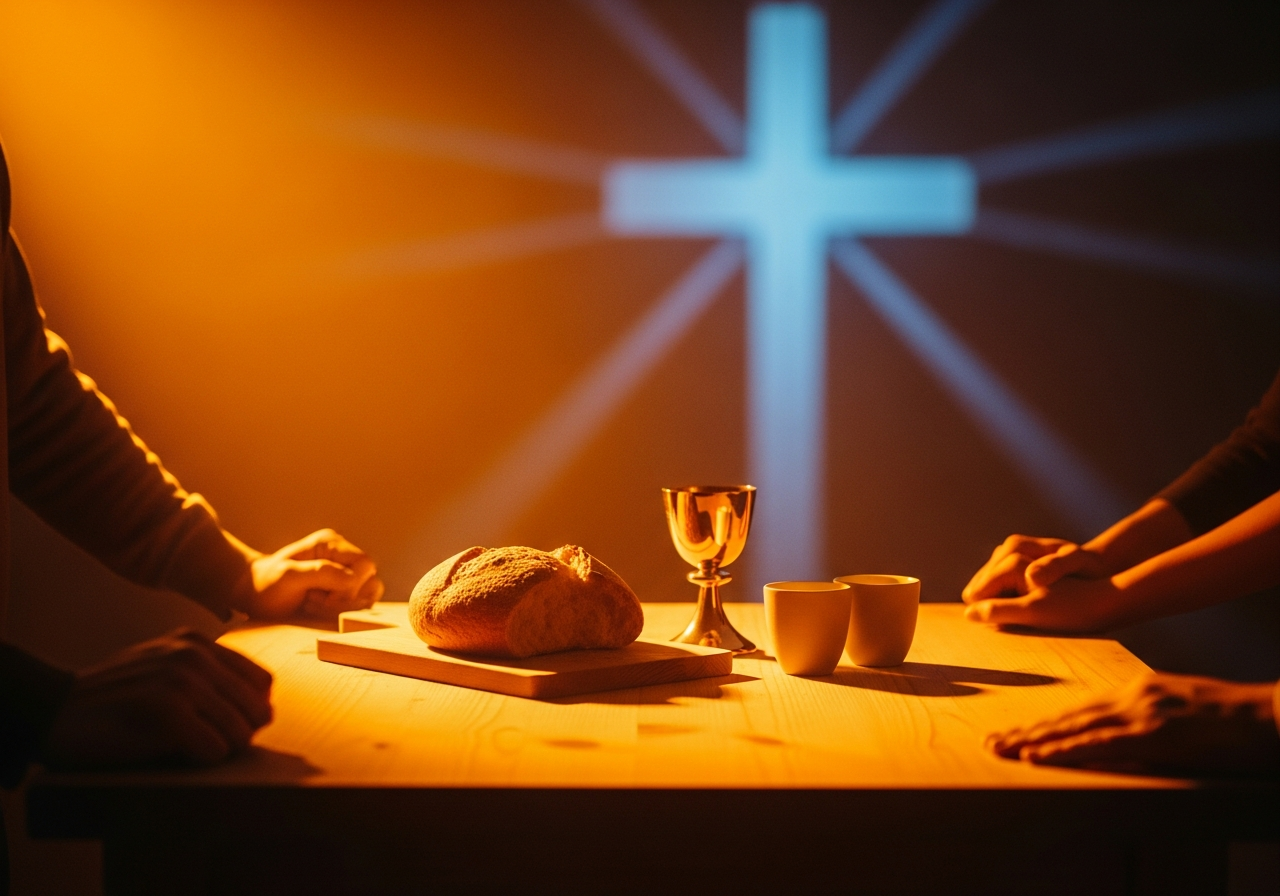
This is part of what happens when we gather for worship, especially around the table. One bread, one cup, one body. Communion is not a private moment tucked inside a public service; it is a holy rehearsal of our belonging. Again and again, God turns us from “me” toward “we,” forming us as the body of Christ for the sake of the world.
Key Scriptures
1 Corinthians 10:17
1 Corinthians 12:12-14, 26-27
Key Takeaways
The Gospel Forms a Holy We
God’s saving work gathers people into shared life. We are not simply individuals with private faith, but members of Christ’s body, called to belong to God and to one another.
Prayer Trains Us Toward One Another
When Jesus teaches us to pray “our Father,” he places communal language on our lips until it begins to shape our hearts. Prayer becomes part of how God forms us into a people.
Sin Curves Us Inward
Sin shrinks our vision until the self becomes the center. The grace of God turns us outward again, toward trust in God and love for our neighbors.
The “One-Another” Commands Build a Common Life
Love one another. Forgive one another. Bear, encourage, serve, and pray for one another. These are not abstract ideals. They are ordinary practices through which Christ strengthens the shared life of the church.
Communion Rehearses Our Belonging
At the table, we remember that one bread makes one body. We receive Christ together and are reminded that we belong not only to him, but also to one another.
Questions for Reflection
How does Paul’s image of the church as a body challenge the ways we often think about independence and personal faith?
What might change in your priorities or relationships if you prayed “our Father,” “our daily bread,” and “deliver us” with deeper attention?
Where do you notice the pull toward “me” most strongly in your own life right now?
Which “one another” command feels most challenging for you to live out in your current relationships, and why?
How might receiving communion more intentionally help you remember your connection to Christ and to other believers?
Recommended Posts

Deliver Us: Footprints on the Sand
October 13, 2026
Deliver Us: Simcha Chagiga
October 7, 2026

Deliver Us: Never in a Million Years
September 28, 2026