
When The Storms Come
 Pastor Jason
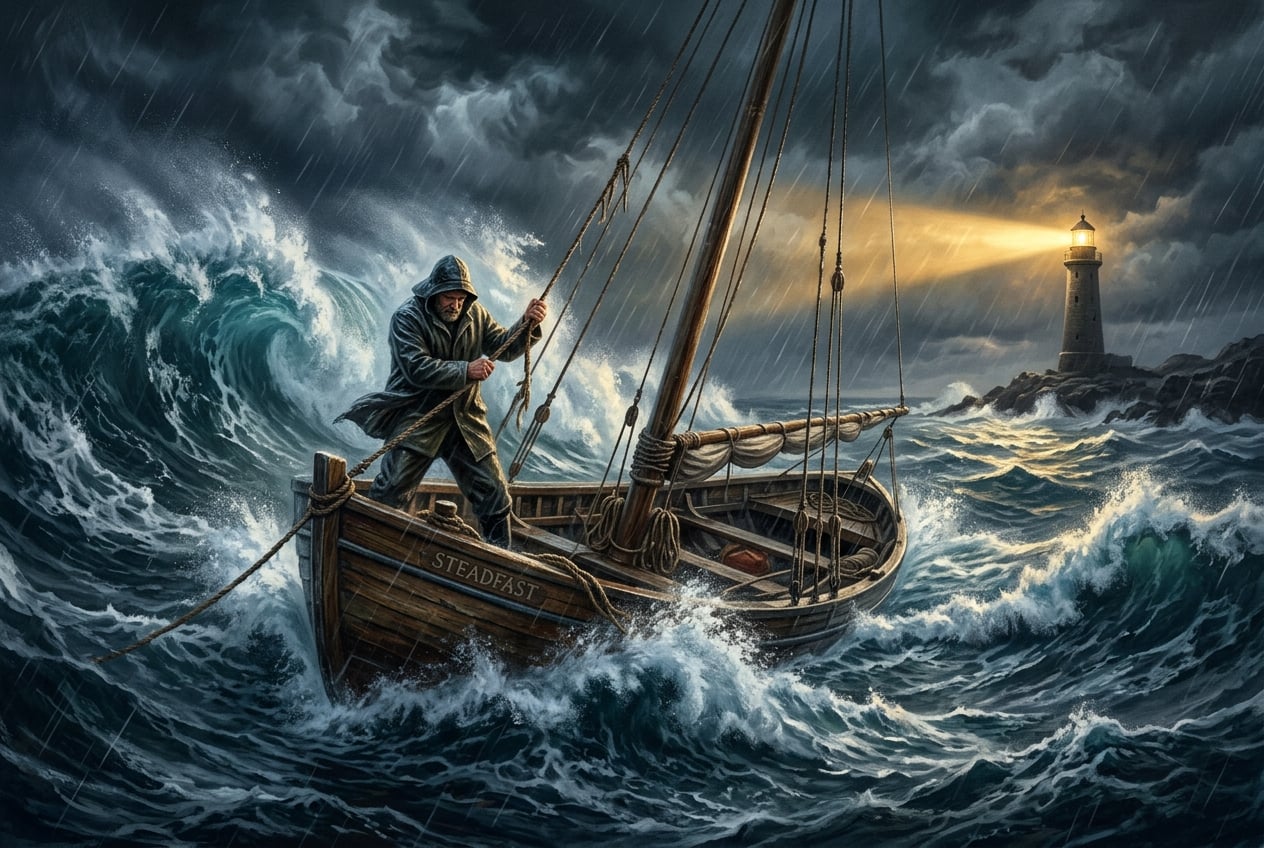
 Life comes at us in storms we can feel and storms we can’t see—a real sea outside and real turmoil inside. Psalm 107 names both, reminding us that even when God commands the wind and hears our cries, the waves can lift us up and slam us down. The storm does not mean God has vanished. Instead, it calls us to lean into the grounded habits and truths that keep our hearts from being pulled under. Just as we know the practical rules for safety in a thunderstorm—move to shelter, avoid hazards—Scripture offers guardrails for the storms of life that help us stay centered when the weather turns dark.
In those moments, faith does not pretend the wind has ceased. It invites us to cry out, to speak honestly before God even as fear gnaws at our courage.
Jesus meets us with a question, “Why are you afraid?”
He asks it right in the middle of the gale, not to scold our fear, but to invite us into a stronger trust. We see this pattern in Scripture: the disciples cry out, Job laments, Jonah prays from the belly. God welcomes that honest outcry and meets us there, turning our fear toward faith.
Acts 27 adds a hard but real rule for life’s storms:
Sometimes the path through requires jettisoning what cannot survive the voyage.
The ship’s crew throw cargo, tackle, and food overboard to endure the wreckage; we too must notice what counts as unnecessary baggage—our urge to fix every problem, to bear every worry, or to carry storms that aren’t ours to carry. The call remains to hold up the person, not the storm, walking alongside the hurting with calm presence, courage, faith, and wise boundaries that shine light toward God.
And when the waters settle, God’s faithfulness must not be forgotten. The rainbow after Noah’s flood and the call to give thanks in Psalm 107 remind us that rescue and covenant come together. Christ does not promise immunity from storms, but he does promise his presence and a song to sing in troubled times, in the fall and toward the other side of the flood.
Key Scriptures
Psalm 107:23–30
Acts 27:13–25
Matthew 8:23–27
Jonah 2:1–2
Key Takeaways
Find calm in God’s presence
Scripture names the terror of the waves while also inviting us to receive God’s quiet, which is more than a mere absence of noise. In God we discover a haven for hearts at the end of their rope, a calm that steadies us even when the sea remains rough.
Cry out without pretending strength
Faith is not the denial of fear. It is bringing fear to God as honestly as we can and trusting that he hears our distress, even when the wind howls and the boat groans.
Keep courage through the wreckage
God may allow structures and plans to break apart, but he preserves what matters most—the lives entrusted to him. Our task is to trust God’s promise even when we cannot see the full recovery yet.
Hold up people, not storms
Love means walking with others without taking on their storms as our own. We offer a calm presence, faithful presence, and wise boundaries that help others see God’s nearness without us becoming the storm themselves.
Remember and keep singing after the storm
Quiet moments after the danger remind us to thank God for his unfailing love. The testimony of God’s faithfulness remains a light that helps us trust him in the next storm and in the days beyond.
Questions for Reflection
In Psalm 107, what words describe the sailors’ fear and helplessness before they cry out to the Lord? What changes after God stills the storm?
In Matthew 8, what do the disciples say to Jesus, and what does Jesus do before the disciples begin asking who he is?
Paul says there will be loss of the ship but not loss of life. How can this help a believer understand that God may preserve what matters most even when a plan, comfort, possession, or expectation is broken?
The cargo and tackle had to be thrown overboard so the people could endure the storm. What kinds of burdens can become “unnecessary baggage” when a person is already facing a difficult season?
Someone close to you may be in a storm of grief, conflict, illness, financial pressure, or family trouble. How can you “hold up the person, not the storm” in a practical way this week?
Recommended Posts

Deliver Us: Footprints on the Sand
October 13, 2026

Deliver Us: Simcha Chagiga
October 7, 2026
Deliver Us: Never in a Million Years
September 28, 2026