
Deliver Us: You Can’t Do This Alone
 Pastor Jason
When something needs doing, many of us instinctively decide to handle it ourselves. Asking for help can feel uncomfortable. We may worry that needing someone else means we have failed, or that we should be strong enough to manage whatever life brings.
But serving God includes learning to receive the help God provides.
In Exodus 18, Moses spends the day settling disputes among the Israelites. From morning until evening, people wait for his judgment and guidance. The work matters: Moses is helping them understand God’s instructions and live together as God’s people. Yet the responsibility has become too much for one person.
Jethro, Moses’ father-in-law, recognizes the strain. Moses will wear himself out, and the people will suffer alongside him. Jethro advises him to choose capable, trustworthy people who fear God and can share the responsibility. Moses listens, and others begin carrying the work with him.
Within our Deliver Us series, this story continues the movement from escaping slavery to learning how to live as God’s people. Life together requires humility, trust, and a willingness to share responsibility. Faithful service makes room for the gifts God has given others.
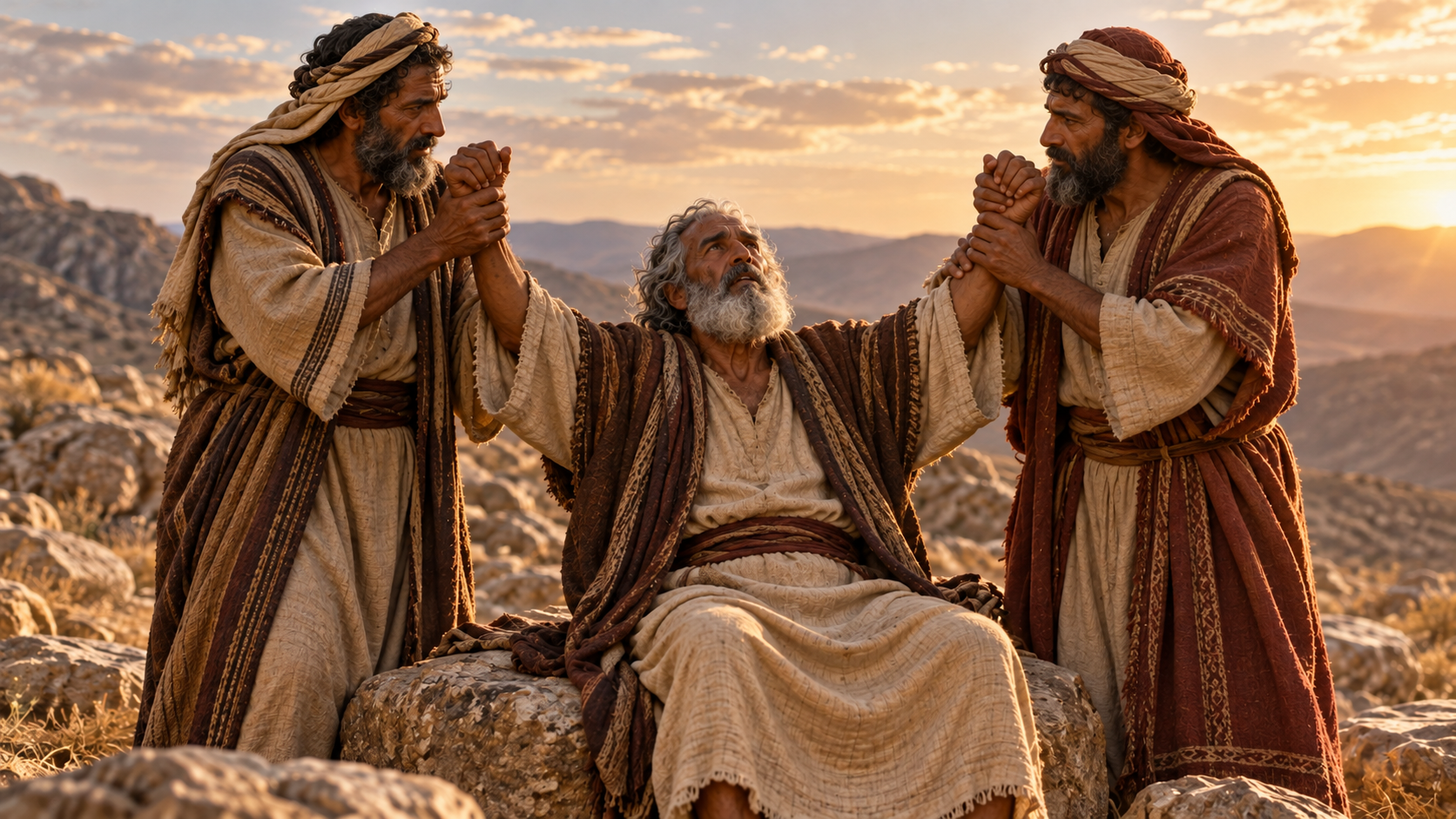
On Sunday, Connor reminded us that God had already given Moses companions for his calling. Aaron helped him speak before Pharaoh. In Exodus 17, when Moses’ hands grew tired, Aaron and Hur supported them. Even while Moses was helping others, he needed others to help him.
We recognize that same need in our own lives. A responsibility becomes overwhelming. A worry grows heavier in silence. We pray for God to help us, yet sometimes struggle to welcome the person who offers to listen, lend a hand, or walk alongside us.
Connor shared a simple, everyday example from his own life. Facing a Spanish quiz he felt unprepared for, he prayed for help. Then a friend shared a rhyme that made the material easier to remember. Receiving that help meant being willing to pause and listen. He recognized God’s care in an ordinary act of friendship.
Psalm 121 points us toward the Lord as the source of our help. Trusting that promise can open our eyes to the ways God’s care reaches us through other people.
We are also called to become people through whom God’s care reaches others. That means offering help with honesty, faithfulness, and love. We can share in a chore, a task, or some work. We can listen without rushing someone, make room for their grief or worry, and pray with them. We can find some way to be a help to a friend, a family member, an acquaintance, and, yes, even a stranger!
Practicing our faith means both giving and receiving. We trust God when we offer our gifts in service. We also trust God when we acknowledge our limits and allow someone else to care for us.
This week, consider one burden you could invite someone to share, and one person whose burden you could help carry. God calls us into a life of mutual care. We can take that calling seriously, one offered hand and one accepted kindness at a time.
Key Scriptures
Exodus 17:10–13
Exodus 18:13–27
Psalm 121:1–2
Key Takeaways
Receiving Help Is a Practice of Faith
Accepting help can express our trust in God’s provision. Acknowledging our limits opens us to the care God offers through others.
Faithful Service Makes Room for Others
Moses continued serving God while sharing responsibility with trustworthy people. Making room for others’ gifts strengthens the community and helps sustain its work.
God’s Help Can Arrive Through Ordinary People
A friend’s encouragement, a useful suggestion, or a helping hand may become a way we experience God’s care. Faith invites us to notice and welcome these everyday gifts.
The Character of Our Help Matters
Jethro urged Moses to choose people who were capable, trustworthy, and faithful to God. We can seek those qualities in the guidance we receive and cultivate them in the help we offer.
Listening and Prayer Help Carry Burdens
We can serve someone by making space for what weighs on them and bringing their concerns before God. Our presence can remind them that they do not have to face their struggles alone.
Questions for Reflection
What makes it difficult for you to ask for or accept help?
When have you recognized God’s care through an ordinary act of kindness?
Is there someone whose wisdom you need to hear right now, as Moses needed to hear Jethro?
What qualities help you recognize trustworthy guidance, and how do you practice those qualities yourself?
Who might need you to listen and pray with them this week?
What is one specific responsibility you could share, or one concrete offer of help you could make?
Recommended Posts

Learning to Be Free
October 26, 2026

Deliver Us: Footprints on the Sand
October 13, 2026

Deliver Us: Simcha Chagiga
October 7, 2026