
The Fire Still Burns
 Pastor Jason
 After the resurrection, Peter goes back to fishing (John 21:3).
At first glance, it feels ordinary enough. But beneath the surface, it feels like something more. Peter has denied Jesus three times around a charcoal fire. He has failed publicly, painfully, and personally. And now, perhaps unsure of who he is anymore, he returns to what is familiar. He goes backward.
Many of us know that feeling.
Not just in the big moments of life, but in the ordinary ones too. We replay conversations we wish had gone differently. We carry regret over words we said or didn’t say. We quietly wonder if we disappointed someone, embarrassed ourselves, or failed at something important. And often, our world teaches us that failure becomes identity. If we make a mistake, we are the mistake.
But resurrection tells a different story.
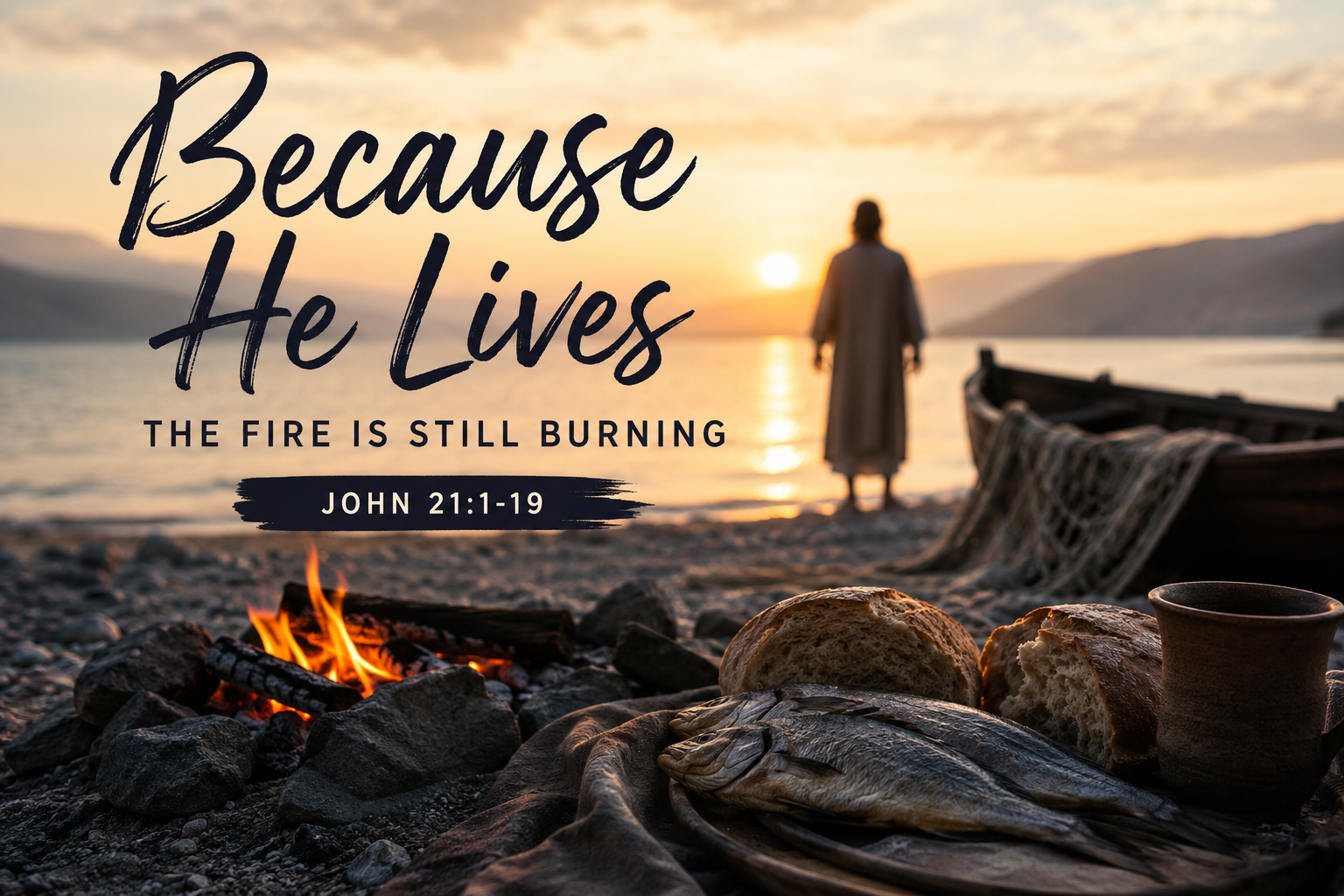
In John 21, the disciples fish all night and catch nothing. Then at daybreak, Jesus appears on the shore. The risen Christ meets them not with anger, but with abundance. Nets overflow. Bread and fish wait on the fire. Breakfast is already prepared.
And then John quietly tells us something important: there is a charcoal fire burning on the shore.
The last time Peter stood beside a charcoal fire, he denied Jesus (John 18:15-18, 25-27).
This time, Jesus brings Peter back to the place of failure—not to shame him, but to restore him.
That matters because resurrection does not erase the past or pretend failure never happened. Instead, resurrection enters the very places where we feel regret, disappointment, shame, or inadequacy and begins making something new there.
Before Jesus asks Peter a single question, He feeds him. Grace comes first. Presence comes first. Love comes first.
Then Jesus asks Peter three times, “Do you love me?”
Not as punishment. Not to humiliate him. But to restore him. Three denials become three opportunities to speak love again. And each time Peter responds, Jesus replies:
“Feed my sheep.”
The call remains.
Peter’s failure did not disqualify him from relationship, purpose, or belonging. In fact, failure itself becomes one of Peter’s greatest teachers. It softens him. Humbles him. Deepens his compassion. The fire that once held shame becomes the place where grace remakes him.
And perhaps that is part of the good news of resurrection for all of us.
Failure is not final.
The risen Christ still meets tired and discouraged people beside old fires. He still speaks grace where we expect condemnation. He still calls imperfect people forward into life, love, service, and growth.
Because He lives, our worst moments do not get the final word.
Grace does.
Key Scriptures
John 21:1-19
John 18:15-18, 25-27
Key Takeaways
Grace comes before restoration
Before Jesus asks Peter a single question, He feeds him breakfast. The risen Christ meets Peter first with grace, presence, and care—not condemnation. So often we think we must fix ourselves before coming to God, but this story reminds us that healing begins by being received, loved, and welcomed.
Resurrection returns to wounded places to bring healing
Jesus brings Peter back to the very kind of fire beside which he denied Him. Not to shame him, but to restore him. Resurrection does not ignore our wounds, regrets, or failures. Instead, Christ meets us there and begins making something new out of what once caused us pain.
Failure does not have to define us
The world often teaches us that our mistakes become our identity. But Peter’s story reminds us that failure can also become a place of growth. Our stumbles can soften us, humble us, deepen compassion, and teach us grace—if we keep learning, growing, and trusting God’s work within us.
God still calls imperfect people
Peter denied Jesus, yet Jesus still called him to “feed my sheep.” The call remained. The same is true for us. We do not have to be perfect to still be loved, needed, and called by God. Grace keeps inviting us to try again, love again, serve again, and live again.
Growth requires the freedom to fail
Many of us become afraid to try because we fear mistakes, embarrassment, or getting it wrong. But Peter’s story reminds us that growth often happens through failure, not apart from it. Children learn to walk by falling. Musicians learn through missed notes. Faith itself often grows through trying, stumbling, learning, and trying again. Resurrection frees us from the fear that failure is final so that we can keep growing, risking, loving, and living.
Because He lives, failure is not final
The fire that once held Peter’s shame became the place of his restoration. The risen Christ still meets people beside old fires, speaking grace where we expect condemnation and reminding us that our worst moments never get the final word.
Questions for Reflection
Reflect on a time when you felt defined by a failure or mistake. How might the image of Jesus preparing a meal before addressing Peter’s failure [43:21) reshape your understanding of God’s response to your own failures?
The sermon says failure “softens our edges, humbles our pride, and teaches compassion” [55:10]. What is one area of your life where failure has taught you something valuable, and how could that lesson serve others?
Jesus’ threefold invitation to Peter (“Do you love me?”) replaced his three denials with three affirmations. Is there a recurring struggle or regret in your life where you need to hear Jesus’ repeated invitation to start again? What would it look like to accept that invitation today?
The charcoal fire in John 21 became a place of restoration instead of shame. Is there a “fire” in your past (a memory, relationship, or mistake) that God might be inviting you to revisit for healing? What step could you take this week to engage that space with Him?
Recommended Posts

Deliver Us: Footprints on the Sand
October 13, 2026

Deliver Us: Simcha Chagiga
October 7, 2026
Deliver Us: Never in a Million Years
September 28, 2026