
Not Falling Alone
 Pastor Jason
 This week in our Lenten series Falling, we walked further down the road to the cross and noticed something we might otherwise miss: Jesus does not walk that road entirely alone. Along the way, three people step into the story. A mother pushes through the crowd and reaches for her son beneath the weight of the cross. A passerby named Simon is suddenly pulled from the roadside and made to carry the cross for part of the journey. And a woman named Veronica risks stepping forward to wipe the dust, sweat, and blood from Jesus’ face. None of them stop the cross. None of them change where the road is leading. But each one refuses to let suffering remain solitary.
These moments show us something important about how God works in the world. Again and again in Scripture, God’s care arrives through the hands of other people. Paul writes in Galatians that we are called to “bear one another’s burdens,” and Ecclesiastes reminds us that when one falls, another can help them up. On the road to the cross, we see exactly that: a mother’s presence, a stranger’s shoulders, a woman’s quiet act of mercy. Each of them becomes part of the way God accompanies suffering.
But the road also teaches us something else. Companionship is not only about helping others; it is also about allowing ourselves to be helped. Jesus allows Mary to reach him. He allows Simon to carry the cross. He allows Veronica to tend to his wounds. That challenges something deep in us, because many of us are much more comfortable giving help than receiving it. Yet Paul reminds us that Christ’s power is made perfect not in strength, but in weakness. Grace often appears precisely when we acknowledge that we cannot carry the weight alone.
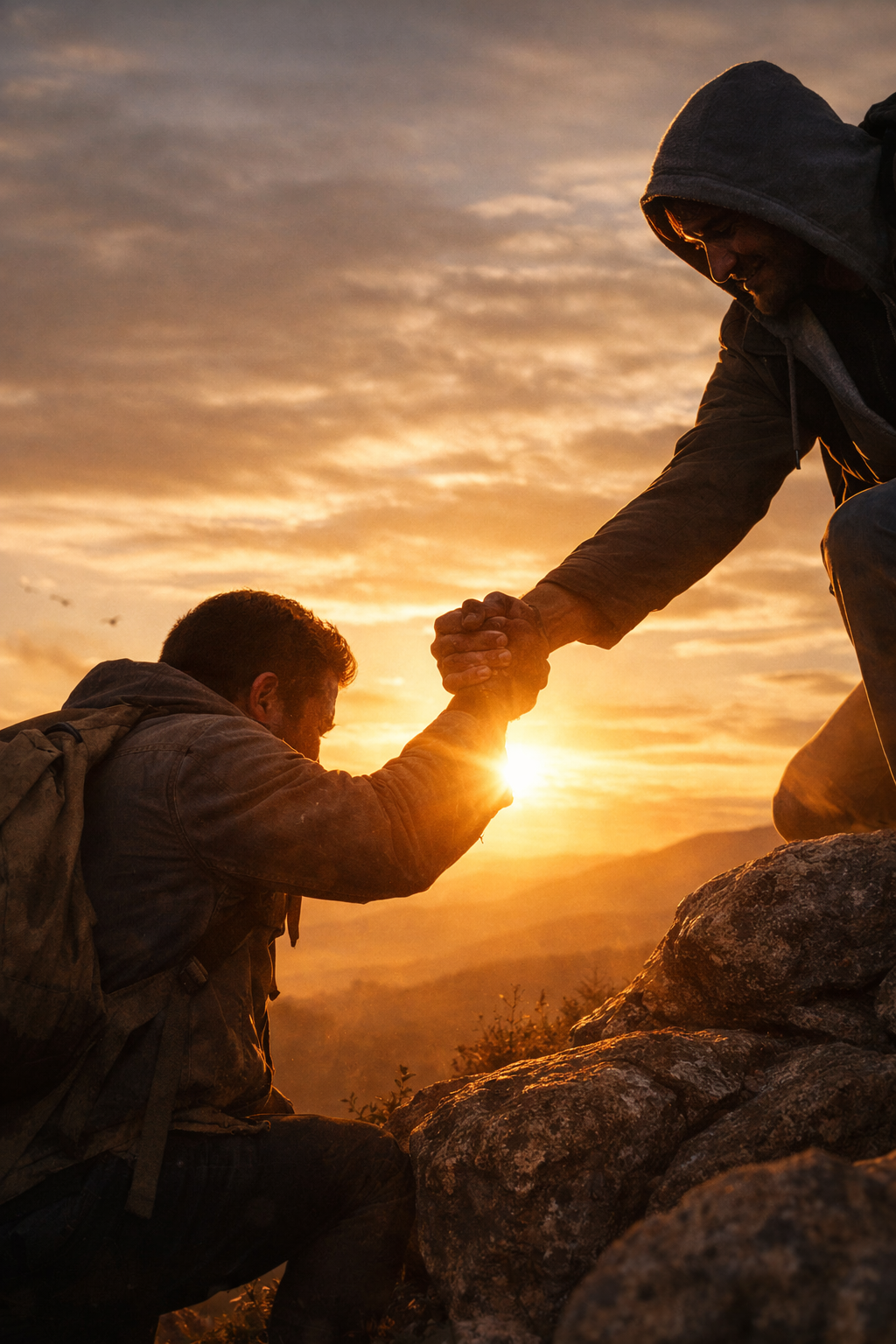
So the road to the cross becomes a place where we learn what real companionship looks like. Sometimes it looks like reaching for someone who is suffering. Sometimes it looks like unexpectedly carrying part of another’s burden. And sometimes it looks like allowing another person to care for us when we have fallen. In all of these moments, we see the same truth: falling is part of being human, but falling does not have to happen alone. God often meets us in the very place where one human hand reaches for another.
Key Scriptures
Mark 15:21
Luke 2:34-35
Galatians 6:2
Ecclesiastes 4:9-10
2 Corinthians 12:9
Key Takeaways
- God often cares for us through other people – Along the road to the cross, God’s compassion shows up through ordinary hands — a mother reaching, a stranger carrying, a woman offering a simple act of mercy. We often pray for God to miraculously remove our pain and pull us out of the pit. And sometimes God does move that way. But just as often, we miss the quieter way God’s mercy arrives day after day: through neighbors who step close enough to share our suffering. [43:28]
- Falling is part of life, but we are not meant to fall alone – Every one of us knows what it feels like for the ground to give way. The good news of this story is that when the weight grows heavy, we are not meant to carry it by ourselves. Sharing burdens is deeply spiritual — God made us to share burdens. And when burdens are shared, the fall becomes something we can endure together. [42:25]
- Real companionship means both giving and receiving help – Accepting aid often feels like weakness, yet vulnerability opens a space where grace appears and power is perfected. Many of us are far more comfortable helping others than allowing someone to help us. But sometimes faith looks like the courage to admit the weight is too much to carry alone. When we allow others to carry part of the burden, we begin to discover that God’s grace often meets us through the hands of the people around us. [46:50]
- Small acts of compassion matter more than we realize – Small acts of compassion restore human dignity. Mary cannot remove the cross. Simon cannot undo the sentence. Veronica cannot change where the road leads. But each of them does something that matters — they step close enough to remind Jesus that he is still seen, still known, still human in the middle of suffering. Often it is these quiet acts of presence and mercy that help restore the dignity the world tries to strip away. [37:17]
Questions for Reflection
Mary, Simon, and Veronica all stop to help. While none of them could stop Jesus’ suffering, their actions are “deeply human, deeply holy.” [39:33] Why are these actions considered holy even though they didn’t change the final outcome?
The passage from 2 Corinthians states that God’s power is made perfect in weakness. How does accepting help – which often feels like an admission of weakness – actually become a place where strength and grace are found?
Falling becomes survivable when shared. [42:25] Where in your life are you currently feeling the ground give way or a weight that is too heavy? What would it look like to have the courage to let someone know you are falling and need a hand to lift you up?
Receiving help requires spiritual courage. [46:09] Our culture often tells us we must be self-sufficient. What makes it so difficult to admit we can’t carry a burden alone? How can we fight the feeling that accepting help is a sign of weakness?
Small acts restore human dignity. [37:17] Think of a time when someone offered you a simple gesture of kindness during a hard time. How did that act make you feel seen and valued? Who in your world could use a similar gesture of dignity this week?
Grace can look like a stranger suddenly carrying a piece of your cross. [48:10] Has there ever been a time when help came from an unexpected person or in an unexpected way? How did that experience reveal God’s care for you?
Divine compassion often arrives through human touch. [40:07] This week, whose burden might be within your reach to carry? What is one tangible, perhaps small, act you could do to help shoulder that load for someone?
Recommended Posts
You Are Not Abandoned
May 12, 2026
Your Doubt Doesn’t Disqualify You
May 5, 2026
You Are Not Without Peace
April 28, 2026